The record is made twice
A photograph records a moment. A system decides what that moment can become.
The camera sets the image size. The photographer chooses where to point it. An archive preserves some pictures and loses others. An interface controls the order, pace and context in which they return. None of these acts is neutral. Each one changes the record.
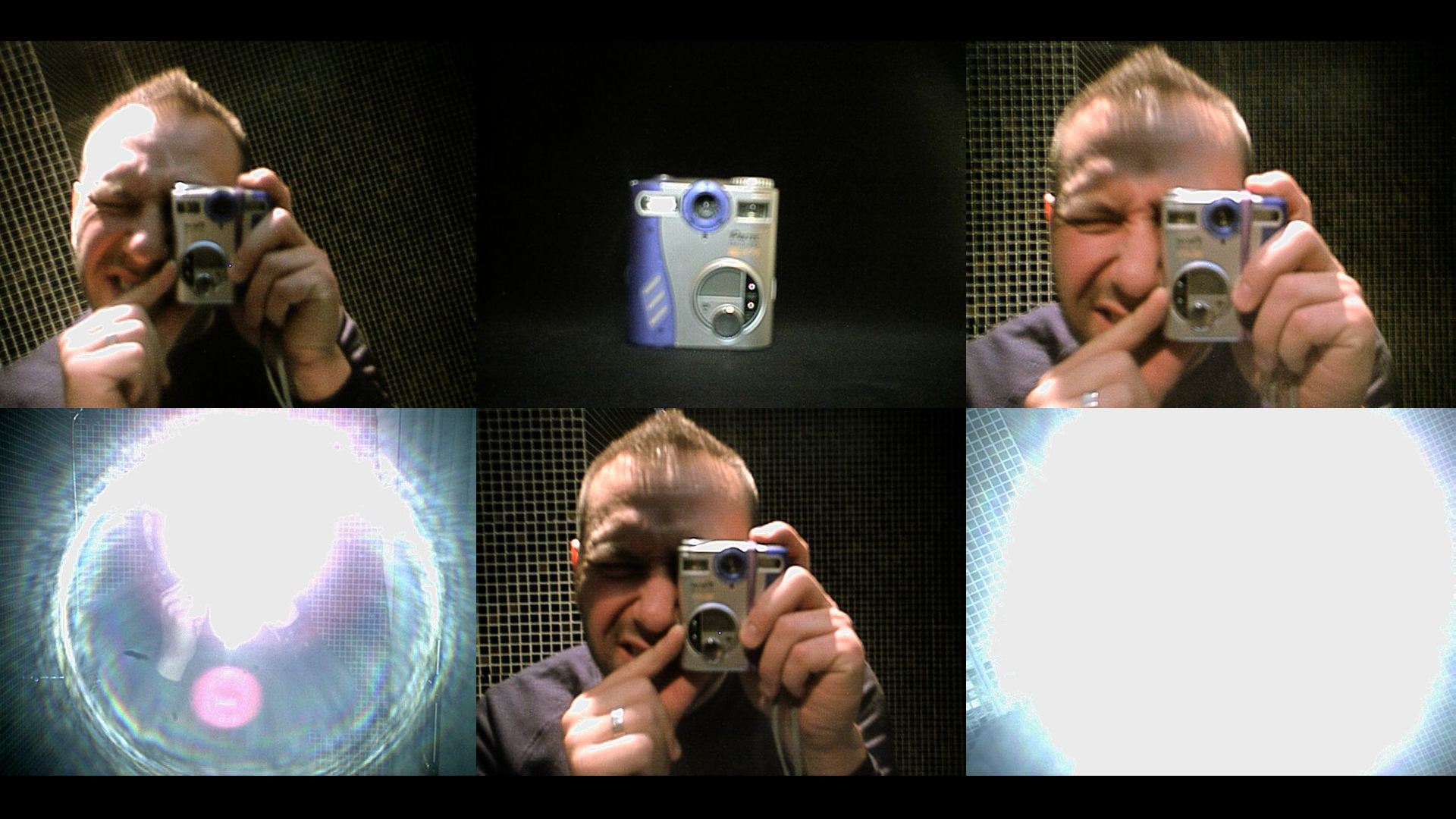
640 x 480 began with a cheap used camera. In 2002, after his Shanghai flat was robbed, Jared Goldberg bought a Pretec DC530 from a colleague. The camera produced images at 640 by 480 pixels, or 0.3 megapixels. That was also a common computer screen size at the time.
The limits were visible. The images were small. Their colour was unstable. Digital noise spread across each frame. Yet these flaws gave the pictures their character. They also fixed the work to a brief point in the history of consumer photography, when a digital camera still had to work hard to make a JPEG.
At first, Goldberg used the camera to take separate pictures. Then he pressed an arrow key while viewing them on his laptop. Because the files were so small, the images changed at once. One picture gave way to the next. Still photographs became movement.
That accident changed the practice.
Goldberg began to shoot with sequence in mind. A gesture could continue across several frames. A walk could become a pulse. A room could shift around a person. Daily life could appear as a rough form of animation known as pixilation.
The result is not a film in the usual sense. It is a long record built from separate moments over more than two decades. Its gaps matter as much as its continuity. A missing image may mark a lost file, a private event or a day when no picture was made. The archive does not offer complete memory. It shows how memory is built from what remains.
The player is part of the work
Pixilation.org does not present the archive as a wall of thumbnails. It gives the images time.
The player lets the viewer move through the sequence. Direction and speed affect what can be seen. Fast movement reveals rhythm. Slow movement returns attention to single frames. Moving backward can turn cause into effect and make a familiar action strange.
The player does more than show the files. It lets the viewer help edit the flow. It keeps the files, but it also stages their return.
This is the central question of Media, Archives and Memory: when does a collection of files become a record, and what happens when the tool used to preserve that record also changes how it is read?
640 x 480 gives one answer. Memory does not live in the image alone. It also lives in the sequence, the missing frames and the machine that brings the archive back to life.
Narcissus as Narcosis: the subject is part of the system
Narcissus as Narcosis begins where 640 × 480 ends. The first work asks how code can shape an archive. This work asks who gets to claim the image.
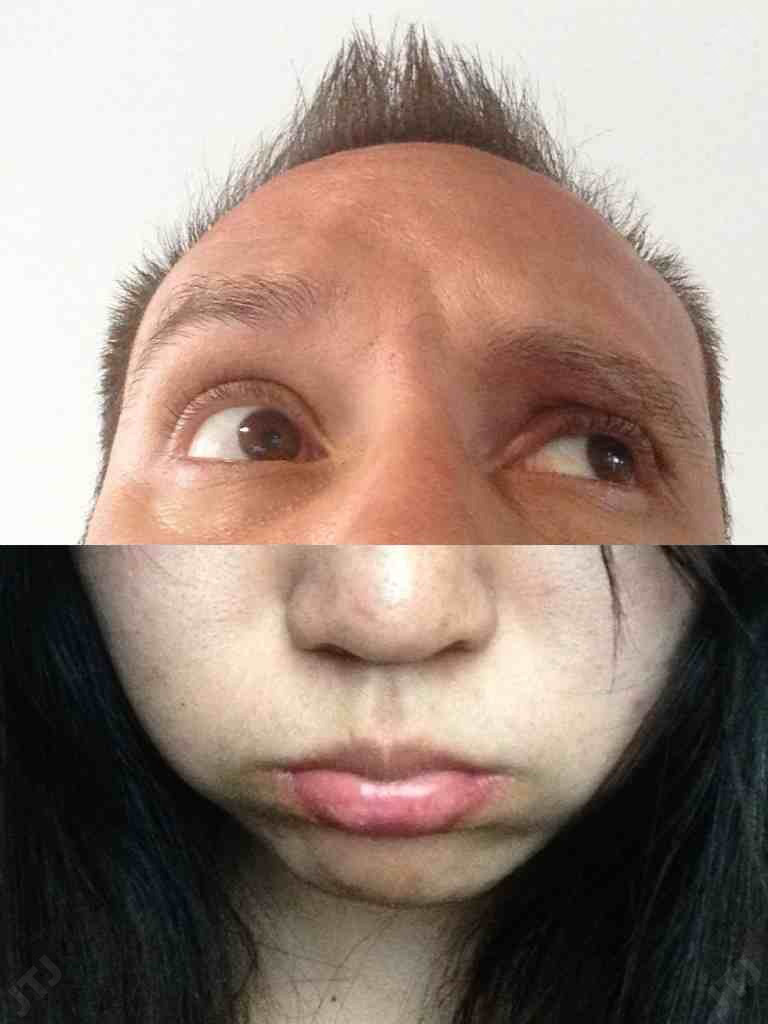
In Understanding Media (1964), Marshall McLuhan's Narcissus was not just vain. He was numb. He could not see that the face in the pool was an extension of himself. He fell under the spell of his own image and began to serve it.
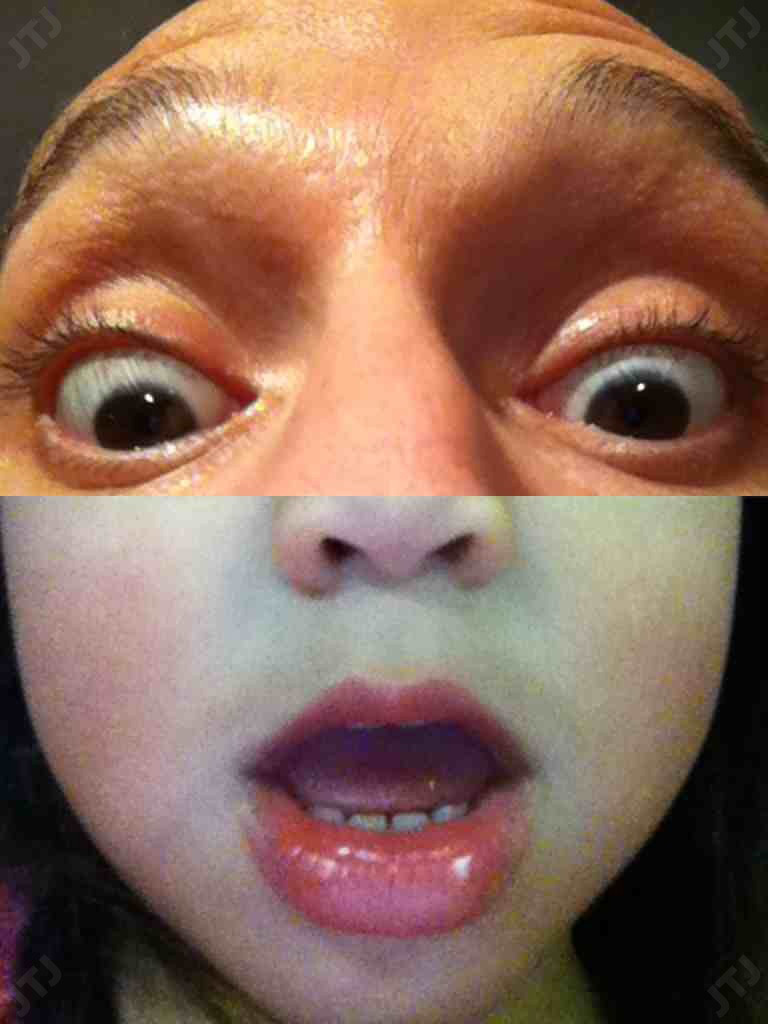
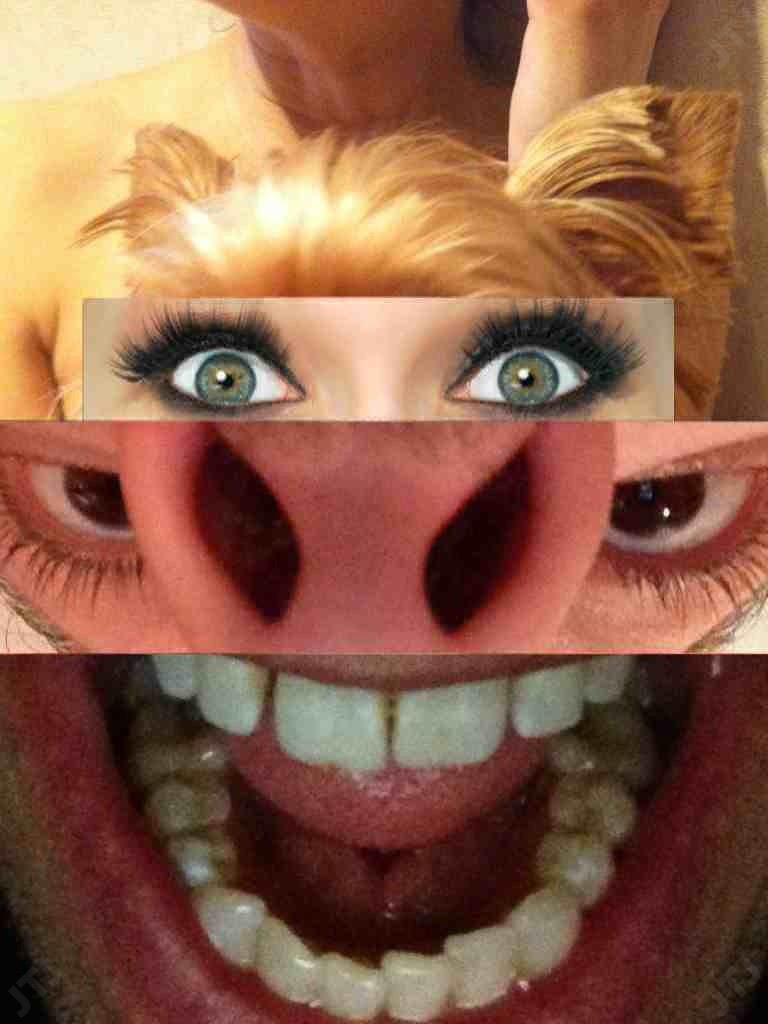
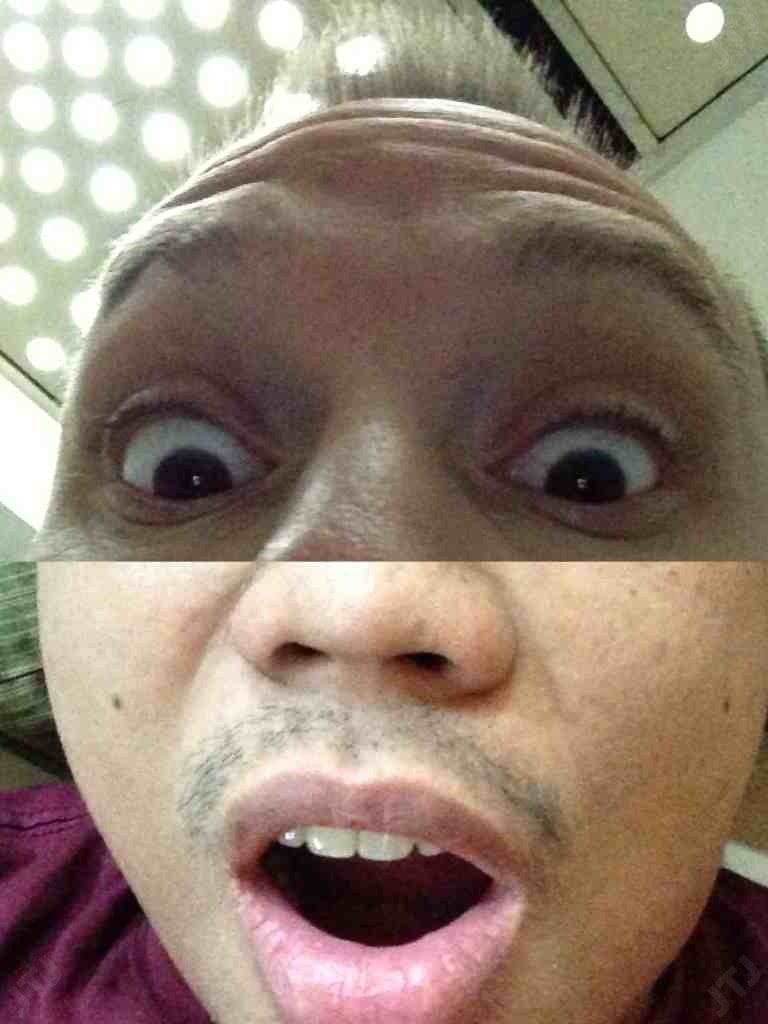
In 2012, Goldberg, working as The Subversive Artist, released Mashup, a mobile app and social network distributed through iTunes until 2016. It looked like a novelty portrait tool. The app guided users through making mashup portraits, then shared the results through its network.
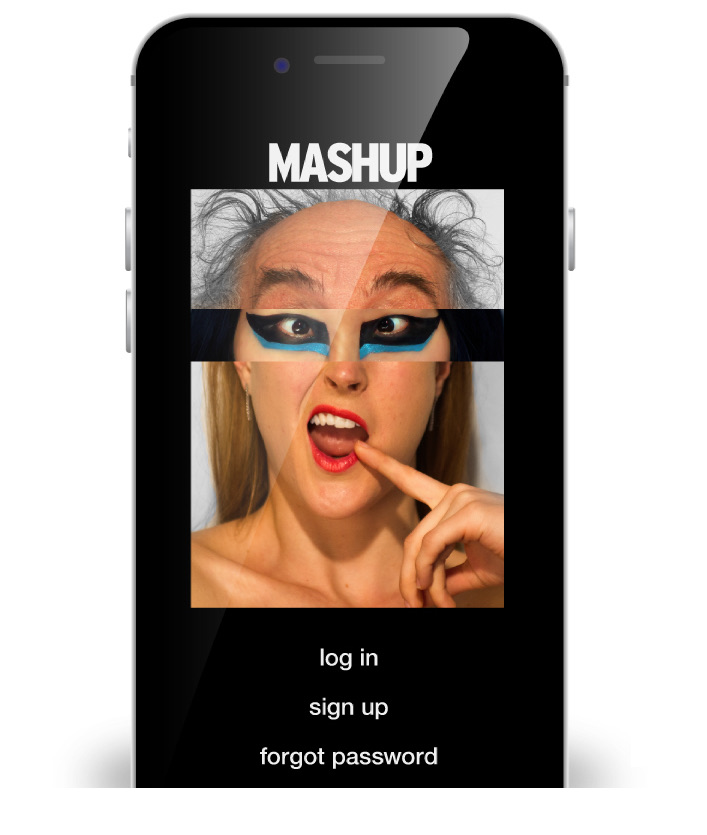
The user made the source image. The code performed the merge. The network sent back the result.
One more actor was waiting inside the system: the artist.
The Subversive Artist chose the output and claimed the set as Orchestrated Self Portraits. A user brought the face. Yet the prompts, app, network, final choice and title formed the work. Credit no longer sat with the person who pressed the shutter. It moved through the system.
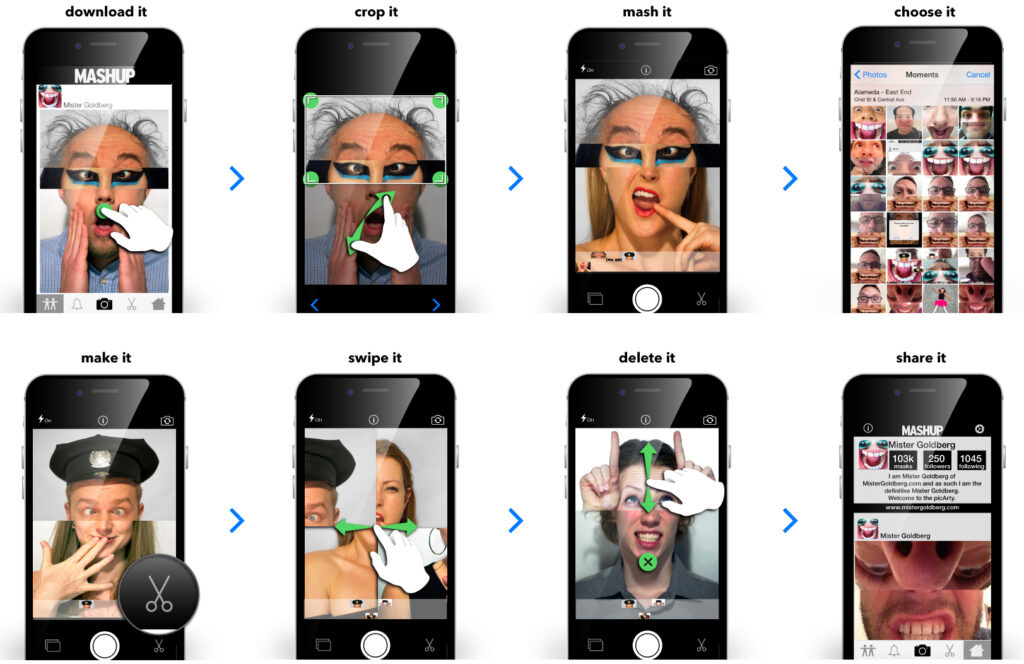
That claim is unstable by design. The user, the code, the platform and the artist each did a different part. No single name can explain how the portrait was made.
Picarty is Mashup's current web form, not the original app. The shell has changed, but the question has not: when an app draws someone into making an image, who is the subject, who is the author, and who is serving whom?
With 640 × 480, the interface changes how an old record is read. In Narcissus as Narcosis, the interface helps make the record. It turns a user's act into raw material for art.